DDP Talks To
"The Devil Ties My Tongue" by Amy Seiwert performed for the SKETCH Series, 2013. Photo by David DeSilva. Courtesy of Amy Seiwert's Imagery
October 16th: Tapestries Choreographic Program, October 20th: 2026 Dance Film Commission, October 20th: SPLIT BILL Series, October 22nd: Perform Europe Open Call, October 30th: Kennesaw State University Choreographic Residency, November 1st: Howard Fellowship, November 5th: CHOP SHOP: Bodies of Work, December 1st: Culture Forward Grant - The Svane Family Foundation Deadline 3, December 1st: Harkness Foundation for Dance Program/Project Grant, December 2nd: NYS Choreographers Initiative (NYSCI), December 31st: National Dance Project Presentation Grants - New England Foundation for the Arts, December 31st: National Dance Project Travel Fund, December 31st: New England Presenter Travel Fund, December 31st: Kit Modus In-person Choreographic Residency
×
"The Devil Ties My Tongue" by Amy Seiwert performed for the SKETCH Series, 2013. Photo by David DeSilva. Courtesy of Amy Seiwert's Imagery
By Aviva Stahl
23 May 2019
A bipartisan group of legislators reintroduced The Pregnant Workers Fairness Act (PWFA) last Tuesday, with the aim of closing the gap between existing protections for pregnant workers and discrimination that still persists against them. The bill was first introduced in 2012 by Representative Jerrold Nadler (D-NY) but failed when opponents claimed that it would create an undue burden for companies. Now, the legislators hope for a different outcome.
“No woman should be forced out of a job or denied employment opportunities simply because she is pregnant,” said Representative Lucy McBath (D-GA), one of the sponsors of the bill.
If passed, the PWFA would close existing gaps in workplace protections for pregnant employees by obligating employers to make minor changes to support them – for example permitting someone an extra bathroom break during a shift, or a chair to sit on. Modeled after the Americans with Disabilities Act, the PWFA states that providing reasonable accommodation is the affirmative duty of an employer unless doing so would pose an undue hardship to his or her business. In addition, the legislation prohibits employers from discriminating against people on the basis of their need for reasonable accommodations related to childbirth or pregnancy.
At the moment, only 25 American states have accommodations laws in place to protect pregnant women, which means that individuals in 50 percent of this country can only rely on federal statutes to guard against workplace discrimination. The Pregnancy Discrimination Act (PDA), passed in 1974, provides some safeguards, as did a 2015 Supreme Court decision that outlined when and how the PDA should protect accommodations.
Read the full article on Women’s Media Center’s news page.
By Mariana Taragano
18 February 2018
Whether familiar with the dance world or not, it probably won’t come as a surprise to most readers that the majority of the dance industry work-force is female. In fact, according to Data USA12, as much as eighty-five percent of the workers in the dance industry are women. However, when examining the past seasons of some of the most important presenting venues in the Northeast region of the United States it becomes clear that gender numbers shift dramatically when looking at successful choreographers.
The numbers:
The gender imbalance in high scale dance companies is not new. In 1976 Wendy Perron and Stephanie Woodard wrote a study called ‘Is there a bias against women in the dance world?’. The article showed clear data by which male choreographers were getting more opportunities and grants, and therefor enjoying more success than their female counterparts. Perron revised her article in 2001 to find that little had changed in nearly thirty years10.
The early 2000’s seem to have been an era of re-awakening to the gender issue in the dance world. This was the time in which several female choreographers including JoAnna Mendl Shaw14, Janis Brenner15, Ellis Wood16 and Heidi Latsky17 formed The Gender Project: a collective that gathered data, participated in panels and created work geared towards changing the face of gender preference in the dance world13.In 2001,Scherr from the New York Times accused the Endowment for the Arts of favoring male choreographers (as for the last five years, the Endowment for the Arts has given balanced grants to male and female choreographers for the production of new work).
Read the full article here.
28 August 2019
As a lifelong lover of the ballet — and as a child of immigrant parents who could not afford to start me in classes when I was little — there was no question that my own kids would be enrolled in dance training as soon as they hit preschool.
When my son was 4, the movie “Billy Elliot” had already come out, telling the story of an English coal miner’s son who, at age 11, battles masculine disapproval to study ballet. The heartwarming film hardened my spine against skeptical family members who wondered why I enrolled my firstborn in level-one tap and ballet classes.
When, predictably, he was the only boy in his class, no amount of assuring him that many big, strong men were proud to call themselves ballet dancers would assuage his shame. Especially when all the mommies fawned over his teeny black slippers.
He cried at his recital and, when it was over, I let him quit. That was that for his dance-related college scholarship.
Read the full article in The Times Herald.

By Hannah Furness
18 December 2015
A lack of female choreographers in dance is not down to simple discrimination but too much self-doubt among qualified women, the director of English National Ballet has suggested.
Tamara Rojo, a ballerina and artistic director, said she had sought female choreographers only for them to turn down opportunities wrongly believing they are not qualified.
Saying she has “never” heard the same doubts from a male choreographer, she admitted even she had hesitated to take senior roles for fear she did not know enough.
Rojo has recently commissioned a triple bill of works by three female choreographers, in a new programme entitled She Said.
In an interview with The Stage, Rojo disclosed she had come up with the idea four years ago, before the issue of women in dance became such a high-profile debate.
“My original motive was simple: I had never done a piece by a female choreographer,” she told the magazine. “In the theatre the dynamic of the piece is always from a male perspective.
Read the full article in The Telegraph.
By Joanna Wane
26 August 2019
It’s a clever play on words, the title of guest choreographer Andi Schermoly’s work “Stand to Reason”, commissioned by the Royal New Zealand Ballet to mark 125 years of women’s suffrage.
It stands to reason, of course, that women should have the right to vote – but it’s also a call to arms. “To stand is an action,” she says. “Nothing gets done unless we do something about it. The piece builds in energy, becoming really relentless at the end, and you see that’s how you make change – by being relentless.
“It’s also a reminder we have to be vigilant and remember that what people have fought for can be easily taken away.”
Now based in Los Angeles, Schermoly grew up in South Africa, where she was a member of the Olympic rhythmic gymnastics team. She had learnt some colonial history at school, so already knew a bit about the suffrage movement when she was approached by the ballet company to create a work for its Strength & Grace season in Wellington last year. But it was only when she began researching the issue more deeply that she stumbled across a pamphlet by Kate Sheppard called “10 Reasons Why Women Should Vote”.
Read the full article on Noted.
It is sometimes suggested that women simply do not think they can choreograph as men do. One aspect of the problem may be due to training that does not suggest that this is a plausible path. This is what makes Pacific Northwest Ballet School’s New Voices: Choreography and Process for Young Women course so significant. At a time when girls’ confidence begins to fade in comparison to young boys’, the school has introduced a class intended to empower them through creativity. Few programs like PNB’s exist at a ballet school level.
In fact, the majority of choreography courses are implemented at a college level. This problematic given the tendency for young dancers to skip college and go straight into the ranks of a company at a young age. Dancers are exposed to the choreographic process only through the lens of a performer, a tendency that is detrimental not only to their success as a dancer, but also to their confidence as they take their next steps in dance, following retirement.
In a time when ballet dancers are embracing new styles and career paths, their schools need to reflect that diversity and experimental nature.
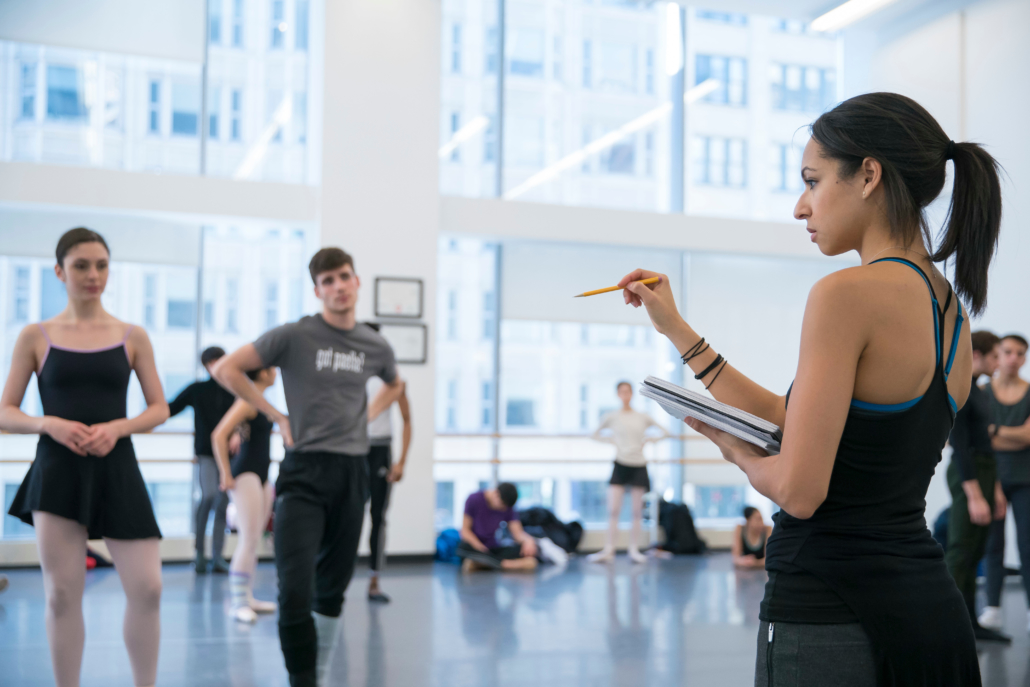
Whether for a major or minor requirement, most university dance programs encourage dancers to explore all aspects of dance. For dance composition, students learn either through a course in which they produce actual works for the stage or through improvisation courses with no end-game of a performance. This opportunity to “workshop,” as choreographers often put it, is exactly what the dance faculty at Dean College are encouraging, Dance Spirit reports. The faculty even went so far as to assert that these courses should be a requirement in dance programs in order to “make sure your dance degree is going to work for you in the real world.” Dance Spirit suggests this may be due to the dying “choreographer/muse” relationship in a process that now “favors collaboration” or improvisation when prompted by the choreographer. As a dancer graduates and joins a company, he or she should be fully prepared to work closely with a choreographer and understand the choreographic process from the creator’s perspective.
This philosophy is extremely relevant for dancers joining smaller companies, where the hierarchical corps structure of a ballet company is replaced by a collaborative, “everyone does everything” environment. It may be advantageous for larger, more influential companies with the corps-soloist-principal hierarchy to embrace, too. Pacific Northwest Ballet artistic director Peter Boal, for instance, introduced collaboration and inverted the power dynamic of director-student relationships by showing his own new work, a piece he made on the Professional Division men for their School Performance, to students in the PNB school’s New Voices course. Following the showing, the group had a 30-minute critique of the work, which dealt with alienation and the support peers can offer. In this choreographer-to-choreographer discussion, the young women ended up helping Boal both in how to approach his final weeks with his dancers and in how to most clearly communicate his ideas for the work.
Dancers at other ballet schools who inevitably skip college will entirely miss this key element in dance pedagogy.
Stephen Ursprung, a professor of Dance Studies at Dean College told Dance Spirit, “‘Oftentimes we impose limitations on what the students can or cannot do and this ignites their imaginations. At first it may be scary or overwhelming: Many dancers come from very rigorous technical training and get caught up in whether what they do is ‘right’ or ‘wrong.’ In a choreography class, these binaries do not exist.'” If these ideas were incorporated into courses at ballet schools, we could be dealing with a greater pool of young dancers feeling empowered to choreograph, regardless of gender.
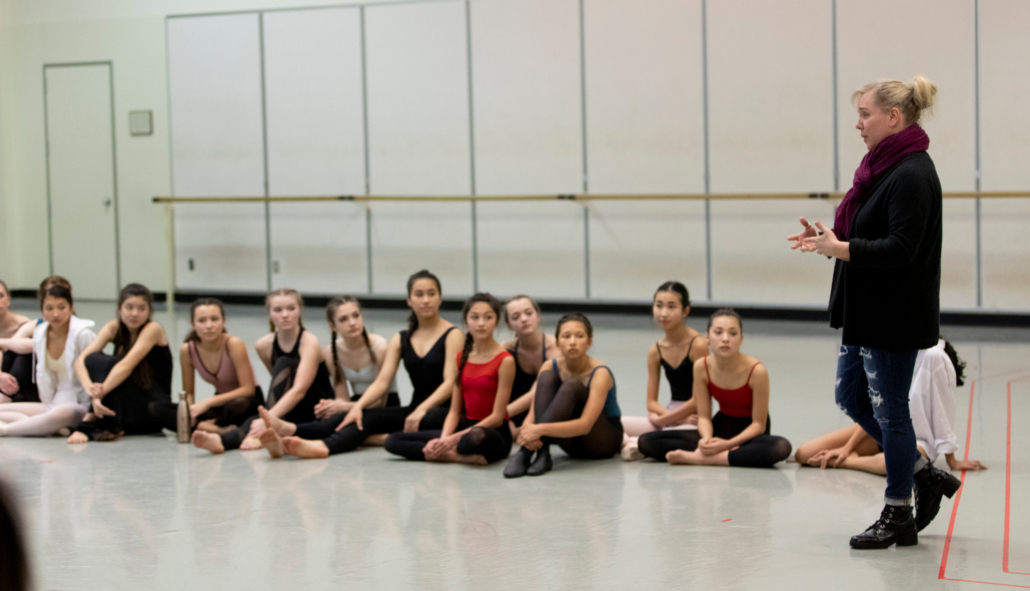
For DDP’s first post in the Initiatives Worth Following series, DDP Founder and President Liza Yntema had the pleasure of interviewing the team behind Pacific Northwest Ballet School’s New Voices: Choreography and Process for Young Women in Dance choreographic course, Pacific Northwest Ballet Artistic Director Peter Boal and Pacific Northwest Ballet School faculty member Eva L. Stone. Watch the video below for an introduction to this groundbreaking course before you read on! Visit the company’s website to learn more about Pacific Northwest Ballet.
Liza Yntema (LY): What inspired you to create the New Voices program?
Peter Boal (PNB Artistic Director, and Director of the PNB School): Eva Stone was the first to identify the need for a program like this, but from where I sit, I was seeing choreographers receive their first opportunities to create as young members of the company (between the ages of 20 and 28). So much of our sensibilities as creators has been shaped by this age.
We are well-schooled in what not to do, and some of the risk-taking and experimentation we might have harnessed at a younger age is already lost. We also may have missed opportunities to analyze and appreciate works we dance in and live in, because we are so focused on steps, balances and counts. To see our profession through a choreographer’s lens from the start is to open a whole new set of eyes and flex another creative muscle.
Eva Stone (PNB School faculty member): Since the course’s inception (for PNB’s 2017 Summer Course), approximately 300 students have participated (including students during our current five-week Summer Course.) For its inaugural run during the 38-week 2018/2019 academic school year, 19 young women were in the class.
LY: Eva, you have a decades-long background in dance pedagogy and choreographic theory. Can you tell us a bit more?
ES: I entered this journey in reverse; mastering choreography before technique. This allowed me to invent a self-generated movement language, one that continued to evolve as my dance training intensified. I had to create “survival tactics” in order to navigate an art form that often made demands that I could not meet. I share these tactics with my students, through the medium of dance technique, imagery, choreographic practice, mentorship, and coaching.
LY: What is the impetus and what are you trying to accomplish?
PB: First and foremost, I want these students to find their voices as artists and creators. I know many may not choreograph later in life and they may not dance either, but the skills they will take away — expression, collaboration, communication, time management and more — will apply to everything in their futures.
I also like the idea of a deeper understanding of the working relationship in ballet studios. Taking on different roles builds respect, empowerment and understanding. I’m not opposed to finding the next generation of great choreographers for PNB and the stages of the world, either.
LY: Why this particular age group or cohort?
PB: The Level VII women (ages 14 – 16) are some of our most devoted students and quite proficient in dance and movement vocabulary. Same is true of our VIIIs, but they are also considering colleges and other paths and their attention is pulled in new directions during much of the year. Level VIIs are “all in.”
LY: What was your takeaway from the girls?
ES: I noticed two significant changes (among many) of note. First, their ability to look at work other than their own with a deeper understanding of how dance is deconstructed and examined: They became more insightful and articulate about work they viewed. And second, all of the girls demonstrated a significant increase in their confidence as students, dancers and dance-makers.
LY: As noted in my dual presentation(s) in Cleveland [see note at end of article], what excites me most about New Voices is that it is geared towards the age group when girls start to lag behind boys in speaking up in class and excelling in math and science. Their confidence fades away. Was this a factor you had to tackle during the program?
ES: Only for the first or second week, and then things began to quickly shift. My opinion is that the all-female environment gave these young women equal opportunity to create, participate, and experiment without distraction or perceived judgement (as is often inherent with young teens in a mixed gender environment.) I also gave the students permission to create without concern for the outcome and asked that they make work that was significant to who they are as artists and creators. They are encouraged to understand that their creative opinion matters.
LY: What were the biggest successes of the first scholastic year of the program?
ES: The two presentations (solo work in January and group work in May) demonstrated their outstanding work and individuality as dance-makers.
What would you change for next year?
ES: Next year will see the course shift to two levels; repeat students that have had the course before, and those that are new.
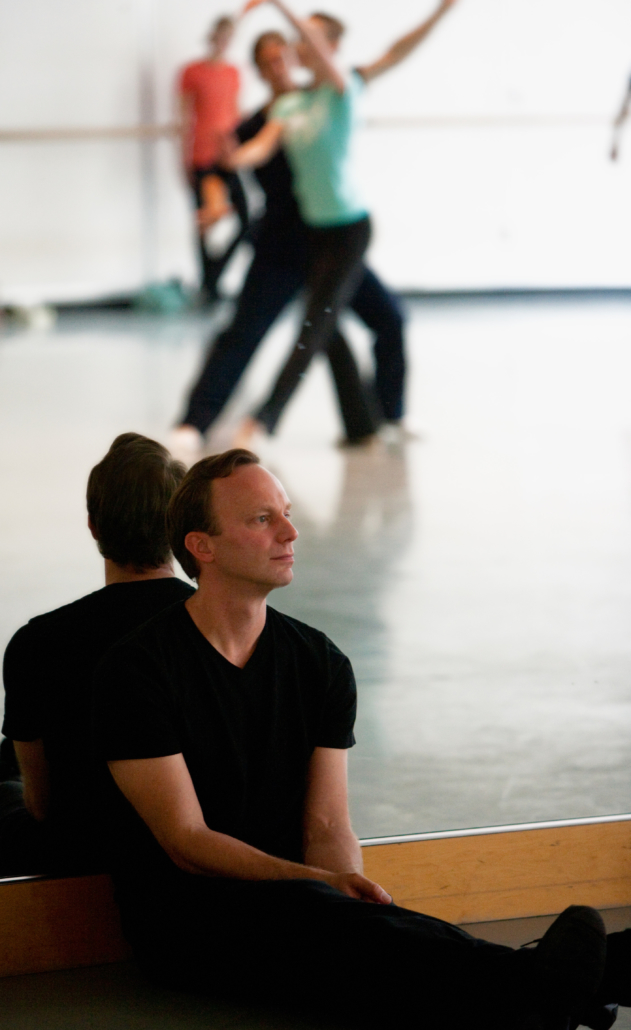
Peter Boal serves as Artistic Director of Pacific Northwest Ballet and Pacific Northwest Ballet School. Mr. Boal assumed the directorship of Pacific Northwest Ballet in 2005 following a successful career with New York City Ballet as a principal dancer, and as a faculty member at The School of American Ballet. He received his dance training from SAB under the directorship of George Balanchine. His performance career spanned 22 years with New York City Ballet and he was a frequent guest artist with national and international companies. In 2002 he founded Peter Boal and Company, a critically acclaimed chamber ensemble. Mr. Boal joined the faculty of The School of American Ballet in 1997, teaching technique, variations, men’s and women’s classes and partnering. He has been a guest teacher at Central Pennsylvania Youth Ballet and Royal Danish Ballet School, among others.
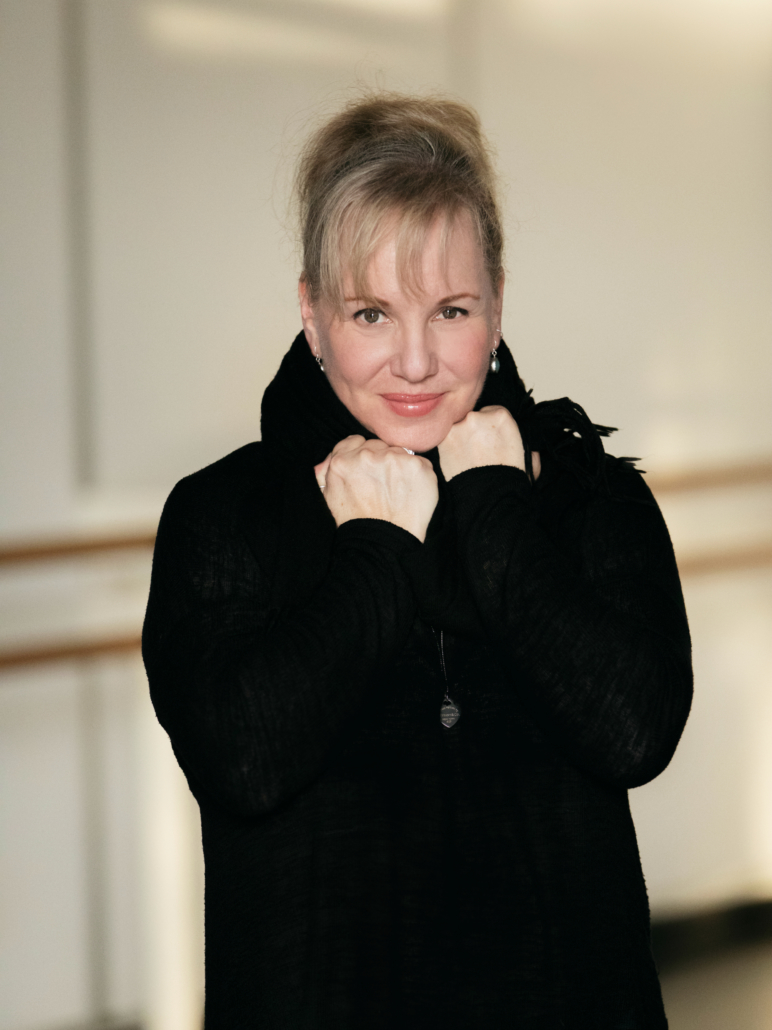
Eva L. Stone is a teaching artist, choreographer, and founder/producer of CHOP SHOP: Bodies of Work, an annual contemporary dance festival. She received her BFA in Performance & Choreography from Arizona State University, and later earned an MA in Choreography & Choreological Studies from Trinity Laban in the UK. She’s created work for Spectrum Dance Theater, Pacific Northwest Ballet/Seattle Art Museum’s Sculptured Dance, Seattle International Dance Festival, Bellingham Repertory Dance, and collaboratively with Seattle Dance Project for Project Orpheus, among others. Her work has been presented in New York, Los Angeles, London, Geneva, Montreal, and St. Petersburg. Most recently, Ms. Stone’s newest work will be among three world premieres by Seattle-based choreographers (Stone, Donald Byrd, and Miles Pertl) presented by Pacific Northwest Ballet in LOCALLY SOURCED, November 8 – 17, 2019.

Liza Yntema, Founder of Dance Data Project®, was invited to speak to Artistic and Executive Directors of mid-sized ballet companies at the Dance/USA Conference in Cleveland, Ohio in June of 2019. Yntema’s speech discussed her 2019 Listening Tour to companies leading the way to equity (the leaders of many of these companies were in attendance), the mission of DDP, and how companies of this size can best serve equity while becoming more financially successful. Specifically, Yntema recommended companies explore choreographic initiatives for girls/young women.
*Liza Yntema is a personal contributor to the New Voices initiative at Pacific Northwest Ballet, as she is The Women’s Movement at American Ballet Theatre and ChoreograpHER at Boston Ballet.
Learn more about the Pacific Northwest Ballet School here.
Read the press release for New Voices here.
L.A. Contemporary Dance Company, Blue 13 Dance Company and Luminario Ballet are among the troupes that will share the stage for “Women Rising: Choreography From the Female Perspective.” BrockusRED founder Deborah Brockus curates this showcase presented by Los Angeles Dance Festival. Ford Theatres, 2580 Cahuenga Blvd. East, Hollywood. 8:30 p.m. Friday. $25-$65. (323) 461-3673. FordTheatres.org
Read the full article in The Los Angeles Times.
By Mary McNamara
15 August 2019
Some people get anxious when they fly, I get tense when I go to a play. Particularly if the space is small and intimate and there is no intermission.
I fret about tech disasters and dropped lines, bad casting and flawed sets as if I were the playwright’s mother or some make-or-break investor. Mostly, I worry that it will be terrible and that I will be trapped. Theater is an active, communal experience; what if I, as an audience member, can’t hold up my end because despite what the reviewers said, I just really hate this play? It’s not like I can hit the remote or get up and leave. I can’t even slump in my seat and commune in horrified hilarity with my friends. The people who are making it are right there.
And that’s for a play that’s finished. Watch a work in progress? Honey, there’s not enough Xanax in the world.
Then my older daughter became a summer intern at the 22nd Ojai Playwrights Conference’s New Works Festival and so I went to the final production. By the time it ended, with a denunciation of John Proctor, a celebration of Lorde and 200 people on their feet cheering, crying and dancing their way onto the stage, my theater anxiety had vanished; I was cured.
Read the full article in The Los Angeles Times.
12 August 2019
Founded by former New York City Ballet dancer Aesha Ash, the Swan Dreams Project is an initiative that advocates for and inspires African-American communities and young ballet dancers who may find their opportunities to succeed in the ballet world limited due to their race or socio-economic status. Learn more about the project from Ash herself in the Project’s video:
Through the use of imagery and my career as a ballet dancer, I want to help change the demoralized, objectified and caricatured images of African-American women by showing the world that beauty is not reserved for any particular race or socio-economic background. I wish for this message to infuse the ballet world and project to the entire world. While exposing more African-American communities to the ballet, I also hope to promote greater involvement and increase patronage to this beautiful art form.
The Swan Dreams Project’s goal is to convey the message that beauty and talent are not constrained by race or socio-economic status. I want our youth to know that they are not limited by stereotypes nor by their environment, but only by their dreams
Learn more or donate to the Swan Dreams Project here.