DDP Talks To
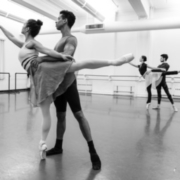
"The Devil Ties My Tongue" by Amy Seiwert performed for the SKETCH Series, 2013. Photo by David DeSilva. Courtesy of Amy Seiwert's Imagery
October 16th: Tapestries Choreographic Program, October 20th: 2026 Dance Film Commission, October 20th: SPLIT BILL Series, October 22nd: Perform Europe Open Call, October 30th: Kennesaw State University Choreographic Residency, November 1st: Howard Fellowship, November 5th: CHOP SHOP: Bodies of Work, December 1st: Culture Forward Grant - The Svane Family Foundation Deadline 3, December 1st: Harkness Foundation for Dance Program/Project Grant, December 2nd: NYS Choreographers Initiative (NYSCI), December 31st: National Dance Project Presentation Grants - New England Foundation for the Arts, December 31st: National Dance Project Travel Fund, December 31st: New England Presenter Travel Fund, December 31st: Kit Modus In-person Choreographic Residency
×

"The Devil Ties My Tongue" by Amy Seiwert performed for the SKETCH Series, 2013. Photo by David DeSilva. Courtesy of Amy Seiwert's Imagery

By Alan Blinder
13 September 2019
PITTSBURGH — The first three games of Pittsburgh’s football season wouldn’t seem like an exhibit of social change: a conference game against Virginia, a home matchup with Ohio and the 100th round of a rivalry with Penn State.
But when Heather Lyke, Pitt’s athletic director, scrutinized the schedule, she noticed something beyond big matchups: The Panthers’ first three opponents were Division I universities where women were in charge of sports.
“That will probably never happen again in my career,” Lyke said in her office last month, her tone at once elated and a little longing.
The coincidental scheduling streak is a sign of the begrudging progress made in elevating women into the executive suites of American sports. Its rarity is also a reminder of a sustained disparity: Of the 65 colleges in the nation’s five wealthiest and most powerful sports conferences, only four have women leading the athletic department.
Read the full article in The New York Times.
By Gia Kourlas
3 September 2019
When Aaron Mattocks became director of programming at the Joyce Theater in 2018, he didn’t have an agenda. He didn’t even have a list of artists he wanted to push. But he knew one thing: “I have no idea what this place needs except change,” he said. “I’m going to shut up and listen, and I’m going to shut up and watch.”
In retrospect, it was a good plan. A couple of weeks into his new job, Mr. Mattocks, 39, attended a discussion about decolonizing curatorial approaches. It was there that he saw, for the first time, the tap dancer Ayodele Casel. “She stood up and said, ‘I’m going to say this: Tap is a black form,’” Mr. Mattocks said. “I wrote down her name.”
Ms. Casel, who is African-American and Puerto Rican, spoke about how tap dancers were being displaced from performance and rehearsal spaces in New York City. “Obviously, I know that tap is open to everybody,” Ms. Casel, 44, said recently. “But I wanted to remind people that this is our tradition, and we shouldn’t be pushed out.”
Mr. Mattocks took note. Under his watch, Ms. Casel — a spectacular tap artist who has been working in the field for more than 20 years — finally has an evening of her own at the Joyce, the dance-dedicated theater that is one of the city’s most important spaces for the art form. In September, she will collaborate with Arturo O’Farrill on a program focusing on Afro-Latin jazz culture. To say that it’s about time is an understatement.
Read more in The New York Times.

By Gia Kourlas
12 September 2019
2019 CROSSING THE LINE FESTIVAL The French Institute Alliance Française’s annual festival — 11 performances, along with a gallery exhibition — embraces artists of different disciplines; this edition is the first programmed by Courtney Geraghty, who took over as the institute’s artistic director in 2018. Established artists, including Peter Brook and Germaine Acogny, will present new works, while Isabelle Adjani makes her New York theatrical debut in “Opening Night,” directed by Cyril Teste. Jérôme Bel returns to the festival with a commissioned portrait of Isadora Duncan in the form of a solo for Catherine Gallant, a New York dancer, historian and teacher who has long explored Duncan’s work. Stefanie Batten Bland modernizes Stanley Kramer’s 1967 film “Guess Who’s Coming to Dinner” in “Look Who’s Coming to Dinner,” and François Chaignaud excavates the rituals of Western theater in “Думи мої — Dumy Moyi,” an intimate solo. Through Oct. 12; crossingtheline.org.
2019 WHITNEY BIENNIAL The biennial includes two dance performances: “Brendan Fernandes: The Master and Form” mixes ballet and S&M culture with a sculptural installation of five structures, including 10 hanging ropes and a cage. The props function as both a help and a hindrance to the performers, who hold positions as a test of endurance (Fridays, Saturdays and Sundays through September). And in “Madeline Hollander: Ouroboros: Gs,” Ms. Hollander creates a site-specific performance inspired by the Whitney’s flood mitigation system; her choreography mimics the path of the barrier (Sept. 19). whitney.org.
Read the full list in The New York Times.
According to The New York Times, “Martha Graham choreographed the all-female ‘Chronicle’ in 1936, the same year she turned down the Nazis’ invitation to dance at the Olympic Games in Berlin and 16 years after women were granted the right to voted in the United States.”
Watch the speaking in dance video here.
By Annie Reneau
12 September 2019
The fine folks at Forbes are currently falling all over themselves trying to clean up the mess they created by publishing their 2019 list of 100 Most Innovative Leaders.

The problem: The list included 99 men and one woman. For those not so good with the math, that means according to Forbes, only 1% of the country’s most innovative leaders are female.
Have you ever watched a movie that’s so abysmally bad that you wonder how it ever even got made? Where you think, “Hundreds and hundreds of people had to have been directly involved in the production of this film. Did any of them ever think to say, ‘Hey, maybe we should just scrap this idea altogether?”
That’s how it feels to see a list like this. So how did Forbes come up with these results?
Let’s start with the description at the top of the published list, synopsizing who compiled the list and how:
“Business school professors Jeff Dyer, Nathan Furr and Mike Hendron teamed up with consultant Curtis Lefrandt to measure four essential leadership qualities of top founders and CEOs: media reputation for innovation, social connections, track record for value creation and investor expectations for value creation. The researchers then ranked these visionaries in a high-powered selection of 100 innovators at top U.S. companies.”
Read the full article on Upworthy.

Nashville Ballet is excited to bring world-renowned Choreographer Annabelle Lopez Ochoa and London-based Director Nancy Meckler‘s beguiling performance of A Streetcar Named Desire to the heart of the South in November 2019.
For the first time ever, Tennessee Williams‘ legendary tale will be performed by a United States-based ballet company on one of the South’s premier stages. Considered Williams’ greatest work, A Streetcar Named Desire dramatizes the life of Blanche DuBois, an aging Southern belle who is forced to leave her aristocratic life and flee to a dilapidated New Orleans tenement after facing a series of tragic losses.
“This ballet represents the perseverance of women who have felt unheard,” said Meckler. “People often assume that female-led performances are fairytales; however, A Streetcar Named Desire is a fictional representation of the challenging reality female artists face in making their voices heard. I hope it will show aspiring artists, particularly choreographers, that women have the right to come out of the shadows and find success – even in what used to be a male-dominated industry.”
For the second time this year, Nashville Ballet will bring yet another boundary-pushing performance to Polk Theater. This adaptation is unique as the story will unfold through the singular perspective of Blanche DuBois. With Lopez Ochoa’s masterful choreography, audiences can expect a new interpretation of Williams’ work; one that humanizes the timeless tragedies of societal expectation and victimization, both of which still ring true for women today.
Read the full article on Broadway World.
By Gia Kourlas
5 September 2019
JUSTIN CABRILLOS at the Chocolate Factory Theater (Sept. 7, 7 p.m.). As part of a creative residency curated by Blaze Ferrer, this choreographer will offer a work-in-progress showing of “As of It,” which press materials describe as a “physical kaleidoscope of trance and emotion.” As he writes on his website, Cabrillos, who will appear with the performers Maira Duarte and Matt Shalzi, views the body “as a run-on sentence.” To see that in action, check out this free public showing. R.S.V.P. to blaze@chocolatefactorytheater.org.
chocolatefactorytheater.org
CO-LAB DANCE at Manhattan Movement & Arts Center (Sept. 6-7, 7:30 p.m.). Lauren Post, a member of American Ballet Theater, directs this group in an evening of new works by Xin Ying, Gemma Bond and Danielle Rowe, who choreographs her piece to a new score by Alton San Giovanni. Eight dancers from Ballet Theater — Zhong-Jing Fang, Carlos Gonzalez, Isadora Loyola, Tyler Maloney, Rachel Richardson, Jose Sebastian, Courtney Shealy and Cassandra Trenary — will grace the stage, along with Erez Milatin of New York Theater Ballet. The program will include music performed by the Momenta Quartet and a short film choreographed by Trenary for herself and the Ballet Theater soloist Calvin Royal III.
colabdance.org
Read the full article in The New York Times.
By Hannah Critchfield
6 September 2019
It’s hard to drive through the Valley without seeing a building or sculpture that’s been touched by the hands of Bill Tonnesen. As a landscape architect, designer, and artist, Tonnesen has been a visible presence in the metro Phoenix creative scene for two decades. He’s well known for his eclectic plans and projects, some of which, like a Phoenix memorial to the Jewish Holocaust, never moved from concept to reality, while others flourished, like the Lavatory, a provocative, “toilet-themed” immersive art museum that opened in November 2018 and often attracts younger people who post photos of the experience on social media. He’s been written about in the New York Times, Arizona Republic, and Phoenix Business Journal. People who have met Tonnesen describe him as wickedly intelligent, odd, and imposing. (In a self-published book, Tonnesen: Twelve Months to Fame and Fortune in the Art World, Tonnesen once said he resolved to be the world’s “third most famous artist” within a year.) Control is important to Tonnesen, and he has a lot of it – both creatively, in the local art scene, and financially, owning properties throughout metro Phoenix.
For at least a decade, rumors of sexual harassment have followed the 66-year-old artist. People long have accused Tonnesen of using his position in the arts world to exploit the young, vulnerable women with whom he often surrounds himself. Last week, a Facebook post describing one such incident went viral in the Phoenix community, generating thousands of views and hundreds of shares and comments. The Lavatory has since temporarily closed, and Tonnesen’s own Instagram has been deleted.
Read the full article in The Phoenix New Times.
By Joel Campbell
7 September 2019
SOUTH AFRICAN choreographer Dada Masilo’s Giselle is bringing ballet into the 21st century. The Soweto-born choreographer and dancer has taken the classic favourite and thoroughly shaken it up so audiences can anticipate the unexpected.
The original ballet, which premiered in Paris in 1841, tells the story of innocent peasant girl Giselle who falls in love with the disguised nobleman Albrecht. When she discovers the truth about her lover and that he will never be hers, Giselle is consumed with grief and dies of a broken heart.
When a remorseful Albrecht visits Giselle’s grave, he evokes the wrath of the Wilis (the spirits of girls who have been betrayed in love) and they exact a heavy penance. Masilo, whose reinterpretations of other classics including Romeo and Juliet, Carmen and Swan Lake built her an international reputation, felt driven to create a new Giselle.
“It’s the challenge of looking at the ballet from a different perspective and dealing with issues that are relevant now,” she said. “In these stories we are dealing with power struggles, war, greed, domestic violence, rape.
“These are the things I see every day. I’m revisiting the classical ballets to tackle these issues and to start a dialogue with people. To ask, ‘What are we doing about this?’ I begin with study of the original work. It’s important to know the rules before breaking them.
“In the traditional ballet there is a clear narrative, but the characters are rather two-dimensional.
Read the full article on Young Voices.
By Bianca Ladipo
“We have some of the best costumes. Come, look,” Tatyana Mazur says as she guides me to the back closet of the small dance studio she runs with her husband, Roman Mazur, in the corner of an unassuming strip-mall in Buffalo Grove, Ill.
Inside, I am met with an explosion of velvet, tulle and satin. The dozens of dresses, tutus and elaborate headpieces stored here comprise a rare collection of Soviet-era dance costumes, still in use more than 40 years after they were made.
12 years ago, when I was 14, I wore one of these costumes. The bodices, bejeweled with hundreds of hand sewn sequins stood in stark contrast to the minimalist costumes of modern ballet productions. The faux gemstones may have seemed large and gaudy up close, but onstage they subtly caught the stage lights, illuminating dancers as they moved. Every decorative element was exaggerated to be visible from the last row of any theater.
Many of the pieces in Tatyana’s collection are delicate and noticeably weak from years of wear. Decades of sweat stains have discolored the fabric lining and the once vibrant satin has faded to pastel. The velvet pulls at the seams, worn-out and frayed. Columns of sizing hooks leave a record of differently shaped Russian, Ukrainian and now American dancers.
Read the full article in The New York Times.

 Charlotte Ballet/Todd Rosenberg Photography 2017