DDP Talks To
"The Devil Ties My Tongue" by Amy Seiwert performed for the SKETCH Series, 2013. Photo by David DeSilva. Courtesy of Amy Seiwert's Imagery
October 30th: Kennesaw State University Choreographic Residency, November 1st: Howard Fellowship, November 5th: CHOP SHOP: Bodies of Work, November 23rd: Camille A. Brown and Dancers Mentorship Program, December 1st: Culture Forward Grant - The Svane Family Foundation Deadline 3, December 1st: Harkness Foundation for Dance Program/Project Grant, December 2nd: NYS Choreographers Initiative (NYSCI), December 31st: National Dance Project Presentation Grants - New England Foundation for the Arts, December 31st: National Dance Project Travel Fund, December 31st: New England Presenter Travel Fund, December 31st: Kit Modus In-person Choreographic Residency, December 31st: Gross Family Prize: Charles and Joan Gross Family Foundation, December 31st: Foundation for Contemporary Arts Emergency Grants, December 31st: Fertile Ground 2026-2027 Season
×
"The Devil Ties My Tongue" by Amy Seiwert performed for the SKETCH Series, 2013. Photo by David DeSilva. Courtesy of Amy Seiwert's Imagery
Announcements about the Dance Data Project™ including new research, upcoming initiatives, additions to the team, and other exciting news.
Dance Data Project® (DDP) today released its Choreographer Checklist: Working Towards a Global Market, a concise to-do list to help female choreographers navigate the changing performing arts field and widen their global audience through digital platforms.
Dance Data Project® (DDP) today announced the creation of the 2020-2021 Season Status Updates resource, an online tool that provides a listing of programming changes for both U.S. and international ballet companies. The resource, which will continue to be updated in real time, details the most recent information regarding company seasons and the specifics of COVID-era programming (e.g., virtual, live, drive-in, etc.).
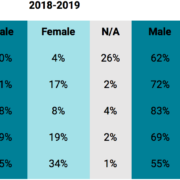
Dance Data Project® (DDP) today releases its 2019-2020 Season Overview, a statistical examination of choreographer gender within the seasons of the Top 50 U.S. companies. This year’s report indicates a significant increase in programming equity from last year, but men remain favored in almost every category.
Dance Data Project® (DDP) today announced the release of Global Conversations – Navigating Challenging Times, the second round in a series of virtual interviews. Round 2 features 10 artistic directors, executive directors, and CEOs of some of the most globally esteemed ballet companies. See the full roster in the announcement.

By Jenesis Williams | 17 June 2020
I am a public speaking champion. I am the captain of a top-five debate team. I have nine national titles and am ranked fifth in the nation in informative speaking by the National Speech and Debate Association. I wield my voice like a weapon, but the only place I remain silent is the ballet studio.
At my first summer intensive away from home, at age 14, I was injured and unable to participate in class, so our teacher decided to play a “game.” I had to record every combination and correction throughout the class. Easy. Except before the first combination started, my teacher asked me if I knew how to spell the steps I had written down. I nodded, but that wasn’t enough. He looked at me, expectantly. His icy glare effectively communicated that he wanted me to spell the entire combination. So I did. I stood up and repeated the combination back to him, spelling out each step.
By the time I had brushed it off, it was time for the next combination. He looked at me again. I spelled out every step, spelling bee style, taking up valuable class time to prove to him I was smart enough to know the steps I had practiced every day for the past five weeks. It evolved into a cycle: write down the combination, stand up, spell it for him, repeat. His eyes widened as I proved capable of spelling out more complicated steps— I was mortified, but I didn’t falter. When class ended, my friends and I talked about how weird that was. Why me? What was wrong with him? Why did he think I couldn’t do it?
What we didn’t talk about was the fact that I was one of two black girls in the class. I didn’t say that this was just one of the many microaggressions that I had to accept as a Black girl who does ballet. I am one of the best speakers in the country, and when the time came, I said nothing.
The ballet world does not give Black students a safe space to speak, to dance, to simply exist. The decisions of white boards, teachers, directors, and choreographers trickle down into the studio where Black students are ultimately told that ballet was not built for Black bodies. Until I watched Misty Copeland’s documentary, I believed that it was physiologically impossible for a Black ballerina to have nice feet— it was what I had been told. I jammed my metatarsals under the piano in my studio daily, telling myself that maybe five minutes of pain could defy genetics. I know I am not alone.
The goal of the corps de ballet is to move as one, fluid body. Each dancer must be a part of a larger whole, standing out enough as to not be too replaceable while simultaneously fitting in. How am I supposed to fit in when my skin color stands out? Famous Black dancers like Raven Wilkinson were told to paint their bodies white to dance. Some, like Janet Collins, turned company spots down for this very reason. But, sometimes, in the shower when I wash off a long day of class and rehearsal, I think about what it would be like to look in the mirror and see the sameness ballet has taught me to desire. I immediately feel guilty. Then I’m angry. And then I go to sleep, only to put on pinkish-white tights the next day.
In class, we are taught that ballet should be an escape from everything outside of the studio. But you can’t escape Blackness, (especially not when your teachers crack jokes like “mosquito lives matter” when a student swats at fly during tendus) and there is nobody to teach Black students how to channel that into their dancing. It takes an educated, anti-racist teacher to find and share Black narratives in ballet with their students. Good luck finding them.
A former student at my studio reached out to the director recently because, despite taking multiple studio-sponsored trips to NYC, she never heard of Dance Theatre of Harlem until she ended up living right next to the company’s studios. She shared Arthur Mitchell’s Giselle with the director, suggesting a studio showing to promote diversity and awareness. I am still waiting for that showing.
Black ballet students deserve to feel like they belong. So please, support initiatives like ABT’s Project Plié. They grant scholarships to students, teachers, and arts administration interns of color, develop their outreach programs within ballet companies, and work with the Boys & Girls Club of America. Help Brown Girls Do Ballet, a nonprofit whose mentor and volunteer network and other initiatives are building the next BIPOC role models in ballet. Increase their impact via donations, sponsorship, buying merchandise, becoming an ambassador, or letting your dancer friends of color know about mentorship opportunities available.
I’ve been told that ballet is just a conversation between a dancer and the audience. If that’s true, it’s time we give young, Black dancers a voice.
A note from DDP: An earlier version of this OpEd listed Dance Theatre of Harlem founder Arthur Mitchell as “Arthur Miller.” DDP corrected this error on July 8th and appreciates Dance Theatre of Harlem for notifying us of the inaccuracy. We make every effort to be accurate, and therefore circulated this piece multiple times, both within our team and within our network of journalistic allies, for thoughts and revisions. We apologize for the unintentional misattribution. For more information on Dance Theatre of Harlem, the company’s legendary founder Arthur Mitchell, and its female leadership team (made up of Artistic Director Virginia Johnson and Executive Director Anna Glass), please visit https://dancetheatreofharlem.
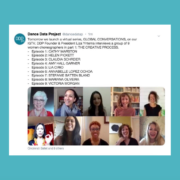
Dance Data Project® (DDP) today introduces Round 1 of Global Conversations – The Creative Process, an ongoing online series of bite-size interviews that feature some of the most notable choreographers, artistic and executive directors, dance critics, and senior academics working in ballet today.
DDP has released Global Fellowships, Competitions, and Initiatives Guide 2020. The Guide is a comprehensive list of international opportunities for choreographers to develop, workshop, and present dance works.

Did you know April is Financial Literacy Month? Dance Data Project® has pulled resources from our friends at Ellevest to provide a platform that encourages financial literacy.
DDP has released our second annual Artistic and Executive Leadership Report today on Equal Pay Day. The report shows persistent inequity in pay among artistic directors of the “Top 50” U.S. ballet companies.
Dance Data Project® today released the updated “Top 50” list of United States ballet companies, which will make up the sample of ballet companies studied by the research team for 2020 reports associated with ballet company repertoire and operations.