DDP Talks To
"The Devil Ties My Tongue" by Amy Seiwert performed for the SKETCH Series, 2013. Photo by David DeSilva. Courtesy of Amy Seiwert's Imagery
October 16th: Tapestries Choreographic Program, October 20th: 2026 Dance Film Commission, October 20th: SPLIT BILL Series, October 22nd: Perform Europe Open Call, October 30th: Kennesaw State University Choreographic Residency, November 1st: Howard Fellowship, November 5th: CHOP SHOP: Bodies of Work, December 1st: Culture Forward Grant - The Svane Family Foundation Deadline 3, December 1st: Harkness Foundation for Dance Program/Project Grant, December 2nd: NYS Choreographers Initiative (NYSCI), December 31st: National Dance Project Presentation Grants - New England Foundation for the Arts, December 31st: National Dance Project Travel Fund, December 31st: New England Presenter Travel Fund, December 31st: Kit Modus In-person Choreographic Residency
×
"The Devil Ties My Tongue" by Amy Seiwert performed for the SKETCH Series, 2013. Photo by David DeSilva. Courtesy of Amy Seiwert's Imagery
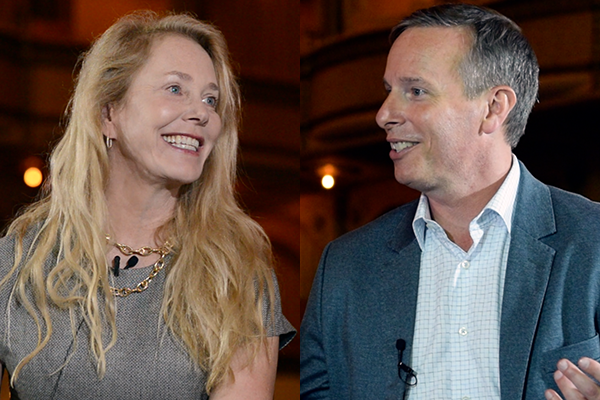
June 24, 2021 | Northfield, IL | Dance Data Project® (DDP) today announces the upcoming release of Global Conversations: Behind the Stage, the fifth round in a series of virtual interviews. Round 5 will highlight those professionals who work behind the scenes and out of sight, creating artistic magic in every production, while coping with disasters on a regular basis. This Round features 11 conversations with a roster of renowned women in their respective fields, from stage managers and lighting designers to fight choreographers and filmmakers.
For the first time, DDP presents Global Conversations in partnership with the Auditorium Theatre. The Auditorium’s commitment to lifting up diverse voices in the arts has been sustained over its 130-year history, celebrating performances by Alvin Ailey American Dance Theater, Ballet Hispánico, and Ballet Folklórico de México, among others.
“Dance Data Project® is delighted to be working with the historic Auditorium Theatre as co-presenter for Round 5 of Global Conversations: Behind the Stage,” commented DDP Founder and President Elizabeth “Liza” Yntema. “On the cusp of their re-opening, it’s critical to be thinking about the role that women artists and artisans play in the $61 billion performing arts economy. The Auditorium Theatre, one of the greatest stages in the U.S., has always been at the forefront of innovative productions, so this true partnership is a great fit.”
Rich Regan, Chief Executive Officer of the Auditorium Theatre and a live-performance professional himself, sat down with Yntema to discuss Behind the Stage and each organization’s commitment to an equitable arts future. He noted, “Emerging from these difficult months, the performing arts community must come together to address inequity in all forms and forge a sustainable future post-pandemic. The innovative work performed by Dance Data Project® provides a necessary perspective on classically based dance and presents it in an accessible way. Behind the Stage will become yet another resource for dancers and arts professionals to learn from, aligning well with the Auditorium’s mission to be ‘The Theatre for the People.’”
In Round 5, Yntema will lead conversations covering each artist’s career path, ability to cope with glitches large and small, and the role the pandemic has had in shaping their respective fields. The roster of participants includes the following list of leaders in producing and creatively constructing some of the world’s best dance and theatre performances.
Week 1:
● June 28, 2021: Dacquiri Baptiste
● June 29, 2021: Caryn Wells & Eleanor Wolfe
● June 30, 2021: Nicole Pearce & Nicole Walters
● July 1, 2021: Bregje Van Balen & Jeanette Oi-Suk Yew
● July 2, 2021: Jacqueline Reid & Kristin Colvin Young
Week 2:
● July 5, 2021: Fiona Findlater & Laura Oliver
● July 6, 2021: Jo Chalhoub
● July 7, 2021: Sharon Huizinga & Kelly Palmer
● July 8, 2021: Bess Kargman & Talia Koylass
● July 9, 2021: Lindsay Gauthier
● July 9, 2021 (Capstone): Jennifer Tipton
Global Conversations: Behind the Stage will premiere the week of June 28, 2021 and continue through July 9, 2021. Episodes will be released every weekday at 12:00 PM/noon EDT on Instagram TV (IGTV), YouTube, and the DDP website.
Founded in 2015 as a simple database and launched officially in 2019 as a 501(c)(3) nonprofit, Dance Data Project®’s mission is to inform equity in classical dance through data analysis, advocacy, and programming. Learn more at dancedataproject.com.
The Auditorium Theatre, located at 50 E Ida B Wells Dr at Roosevelt University in Chicago, is an Illinois not-for-profit organization committed to presenting the finest in international, cultural, community, and educational programming to all of Chicago and beyond as The Theatre for the People. The organization also is committed to the continued restoration and preservation of this National Historic Landmark. For more information visit AuditoriumTheatre.org.
DDP ally and choreographer Nicole Haskins shares her thoughts on what foundations and funders can do to better support female choreographers.

Dance Data Project® (DDP) today released its third annual Artistic & Executive Leadership Report, doubling the scope of ballet companies surveyed to 100 and, for the first time, including compensation analysis for associate artistic directors and other highly paid individuals, in addition to previously surveyed artistic and executive directors.

Dance Data Project® welcomes six new team members to its summer 2021 cohort!

1 June 2021
By Siobhan Burke
As a teenage ballet student in the 1990s, Katy Pyle had no interest in dating: not boys, not girls, not anyone. A serious love interest — all consuming, really — was already in the picture: ballet.
“I didn’t have space for any other relationships in my life,” Pyle, who uses the pronouns they and them, said in a phone interview from their home in Brooklyn. “It’s silly, but that was my true love.”
Looking back now, at 40 — as a genderqueer lesbian and the founder of the joyful, iconoclastic ballet company Ballez — Pyle can see that relationship more clearly, how it kept them from knowing their full self. Growing up, they knew many openly gay male dancers. But in Pyle’s mind, they said, to be a ballet dancer, gay and a woman “just wasn’t a possibility.”
“I truly was a stranger to myself until I got out of ballet,” said Pyle (who notes that while they are a lesbian and feminist, they don’t fully identify as a woman). “I did not ever know a lesbian in ballet in my training, and it was hard to even find lesbians in the culture at large. There was a real lack of representation, which kept me closeted and confused.”
As Pyle observed from a young age, ballet — a form based in rigidly gendered aesthetic values — is not a world without queer people. But those who are most visible, and have been historically, are gay men. To be a lesbian in ballet, or queer and not a man, is often to feel like the only one, to wonder, in the words of the choreographer Adriana Pierce, who trained at the School of American Ballet: “Has anyone ever done this? Has anyone like me ever walked these halls?”
Ballet upholds narrow ideals for everyone: for men, the archetype of the chivalrous prince; for women, the elusive swan or sylph. Women are expected to look weightless (an image reinforced by the pointe shoe), men more outwardly muscular. Men learn to lift, women to be lifted. In classrooms, strict male and female dress codes often apply.
But within these confines, women typically face greater pressure to conform, in part because there are more of them; competition is steeper. As Pyle puts it: “If Katy Pyle is not living up to the expectations of how to be, there are 20 other young women who want that place.”
Challenging those expectations can be risky and isolating. But more celebrations of difference are emerging. Over the past year, aided by the downtime of the pandemic and the ease of meeting online in the age of Zoom, queer ballet dancers, in particular those socialized as women in their training, have been forging stronger networks and creating work that affirms they’re not alone.
To read the full piece, click here.
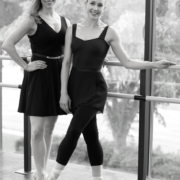
DDP Talks To…Sara Clayborne and Emily Hartka, Co-Directors of Charlottesville Ballet

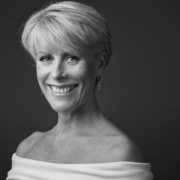
DDP Talks To…Anne Maher, Artistic Director of Ballet Ireland
26 May 2021
By Elaine Sciolino and Alex Marshall
Move over, Mona Lisa. You may be about to have competition as the most-talked-about woman in the Louvre.
For the first time since its creation in 1793 in the wake of the French Revolution, the Musée du Louvre will be headed by a woman, Laurence des Cars, the current head of the Musée d’Orsay and the much smaller Musée de l’Orangerie.
Des Cars, 54, was appointed on Wednesday as the museum’s president-director by the president of France, Emmanuel Macron.
“Four years at the Orsay gave me this confidence, this crazy idea that I could be the next president of the Louvre,” des Cars said in an hourlong telephone interview. “The president probably saw that I was ready for the job and that I am somehow serene. I am not overanxious. I have to stay very calm.”
On Sept. 1, des Cars will replace the museum’s leader of eight years, Jean-Luc Martinez, who had waged an intense media campaign to stay on for a new five-year term.
The two museum directors could not be more different. Both studied art history at the École du Louvre, the museum’s prestigious school. But the Louvre has traditionally been run by upper-class art historians, and Martinez, a trained archaeologist with little expertise in painting, was the son of a postman from a working-class suburb of Paris. Des Cars, a specialist in 19th- and early-20th-century painting, is descended from a French noble family of writers.
To read the full article, click here.
5 May 2021
By Courtney Connley
In the United States, mothers working full-time, year-round make an average of just $0.75 for every dollar paid to full-time working fathers, according to a new analysis from the National Women’s Law Center.
As a result, the average working mom has to work an additional five months into the new year to reach the same pay fathers earned the previous year, leading Mother’s Equal Pay Day to fall on May 5 this year. That’s nearly two months after equal pay day was reached for women on March 24, as full-time working women on average earn just $0.82 for every dollar paid to men.
This pay gap for working mothers leads to a loss of $1,275 a month and $15,300 a year in wages. For women of color, this gap is even higher with full-time working Latina, Native American and Black moms being paid an average of $0.46, $0.50 and $0.52, respectively, for every dollar paid to white fathers.
“This loss is depriving moms of their ability to weather this [Covid-19] storm,” NWLC Director of Research Jasmine Tucker tells CNBC Make It. “We know that about one in four women who are unemployed right now have been looking for work for a year…just imagine what that $15,000 or more could do if you had that sitting in the bank because you were paid what you were owed before this all happened.”
In front-line occupations like nursing, waitressing and housekeeping, full-time working mothers are paid just $0.84, $0.67 and $0.65, respectively, for every dollar paid to full-time working fathers doing the same job.
To read the full article, click here.