DDP Talks To
"The Devil Ties My Tongue" by Amy Seiwert performed for the SKETCH Series, 2013. Photo by David DeSilva. Courtesy of Amy Seiwert's Imagery
October 16th: Tapestries Choreographic Program, October 20th: 2026 Dance Film Commission, October 20th: SPLIT BILL Series, October 22nd: Perform Europe Open Call, October 30th: Kennesaw State University Choreographic Residency, November 1st: Howard Fellowship, November 5th: CHOP SHOP: Bodies of Work, December 1st: Culture Forward Grant - The Svane Family Foundation Deadline 3, December 1st: Harkness Foundation for Dance Program/Project Grant, December 2nd: NYS Choreographers Initiative (NYSCI), December 31st: National Dance Project Presentation Grants - New England Foundation for the Arts, December 31st: National Dance Project Travel Fund, December 31st: New England Presenter Travel Fund, December 31st: Kit Modus In-person Choreographic Residency
×

"The Devil Ties My Tongue" by Amy Seiwert performed for the SKETCH Series, 2013. Photo by David DeSilva. Courtesy of Amy Seiwert's Imagery

By JP Squire
1 May 2019
Spring has always represented the re-awakening of nature so Ballet Kelowna is celebrating that fresh beginning with three premieres of re-imagined 100-year-old works at 7:30 p.m. on May 3-4 at Kelowna Community Theatre.
The presentation of Spring, following Autumn on Nov. 16-17 and Winter on Feb. 1, wraps up the 2018-19 season with works from a trio of esteemed Canadian female choreographers who will introduce refreshing takes on works by Igor Stravinsky, originally commissioned for Paris’ Ballet Russes between 1910 and 1913. Tickets are available at: balletkelowna.ca.
Ballet Kelowna artistic director Simone Orlando’s Rite of Spring, Heather Dotto’s Petrushka and Amber Funk Barton’s Firebird all feature contemporary dance rather than going back to the original material from more than a century ago. The fourth work is the Kelowna ballet company’s premiere of Spring from one of Canada’s top emerging talents, Alysa Pires, creator of the effervescent fan-favourite Mambo.
A Studio Series presentation at the 2283 Leckie Rd. studio and headquarters on Thursday teased about 100 young people with the company’s goal of attracting a younger audience, not only to ballet but other artistic endeavours in the Okanagan.
Dancers highlighted segments from the four exquisite pieces, each distinctly different from the other, yet each mesmerizing. The choreographers each found different ways for dancers to interconnect through intertwining bodies, innovative lifts, and intricate individual and ensemble movements that portray a wide range of emotions and plot development.
Read the full article in the Kelowna Daily Courier.

More than once while Sarah Alexander was growing up, her ballet teachers thought she should limit school and focus on a professional dance career. But the young dancer, who began taking lessons at the age of 3, was determined to figure out how to pursue both school and dance.
Next month, the fourth-year New Orleans native will walk the Lawn in Final Exercises as a Phi Beta Kappa graduate with a degree from the University of Virginia’s Frank Batten School of Leadership and Public Policy. Through Batten projects and her volunteer work with Madison House’s Cavs in the Classroom, and even in ballet, she has learned a set of leadership skills that combine organization and attention to detail with a dancer’s confidence and grace.
Since stepping on Grounds, she has been a member of the Rhapsody Ballet Ensemble, the only student-run dance group that performs “en pointe” – on the tips of those square-toed shoes that lace up to the ankle.
Read the full article on the UVA website.
By Julia Travers
26 April 2019
While women fill most of the shoes in ballet, leadership positions are still dominated by men, especially in choreography and artistic direction roles. A nonprofit called the Dance Data Project (DDP) aims to help more women in dance keep up to date with choreographic opportunities and ascend the ballet leadership ladder. With this goal in mind, in April 2019, DDP released a reporton contemporary opportunities in choreography, along with monthly spreadsheets and calendar reminders of global deadlines. Earlier in 2019, it also published research on salary by gender for leaders in ballet, finding notable imbalances in favor of men, especially in artistic direction.
DDP’s overarching goal is to raise gender equality awareness in ballet through research, advocacy and other programs. It also serves as a resource for other “artists of merit,” including photographers, lighting and costume professionals, set designers, and composers. DDP founder and president, Liza Yntema, is also a personal sponsor of the American Ballet Theatre’s project to support female choreographers called Women’s Movement and a similar initiative from the Boston Ballet called ChoreograpHER.
DDP’s new calendar of opportunities includes ballet choreographic scholarships, fellowships and competitions, which it explains are training pipelines for lucrative choreographer and artistic director positions. As part of its related research efforts, DDP conducted a listening tour of ballet companies in the U.S.
“We heard from ballet company artistic directors and senior staff that women just don’t apply in the same numbers as men, often because they are unaware of what is out there. They do not have the network that men enjoy,” Yntema said in a statement. The directors also said men tend to be more forward and self-promotional during the application process.
Read the full article on Philanthropy Women’s blog.
By Maya Salam
26 April 2019
Like many, I spent two hours last week watching Beyoncé burn past all logical boundaries of musical performance in her new Netflix documentary, “Homecoming,” about her elaborate 2018 Coachella set. It was an epic show — so much so that fans nicknamed the whole event Beychella — but a rare one. She was the first black woman to headline Coachella in its 20-year history.
Beyoncé is just one of several female artists — Ariana Grande, Cardi B, Kacey Musgraves, Halsey, Billie Eilish — dominating the music scene these days with No. 1 albums and songs, raking in awards and breaking records while they’re at it. But as we enter music festival season, you’d never know it.
Female artists are usually starkly absent from headlining spots and are often a fraction of overall lineups.
This month at Coachella, women made up 35 percent of acts, the same as last year, according to Book More Women, a group that manipulates posters of major festivals to show how few women were playing. Further, according to Nielsen, festivalgoers are majority female.
Read the full article in The New York Times.
By Anna Bennett
“It’s 1940, and you just took a boy home.”
In reality, it’s 2018, an early afternoon in a Tulsa Ballet studio. Choreographer Andy Blankenbuehler is probing for the meaning behind a moment of movement that’s not quite working.
“Who should make the move? Who has the power?” Blankenbuehler asks Daniel Van De Laar and Maine Kawashima, the Tulsa ballet dancers cast in this duet.
The dancers look at each other, unsure of the right answer. But Blankenbuehler doesn’t have the answer either — it’s something they’ll all have to figure out together, from the top, once more.
Everyone resets to the beginning of the phrase, does it again, shifting the emphasis, pausing a little longer on this moment or that. The second cast for the duet, Minori Sakita and Jonathan Ramirez, shadows the action.
For Blankenbuehler, creation is a conversation, one that takes place over hours and days in the studio with the dancers, and continues even after he has left. At that point, his assistant, Cindy Salgado, stays to continue working and polishing the piece while he jets off to his next commitment (in this instance, off to London to choreograph the upcoming film adaptation of the classic musical “Cats”). But the Tony award-winning choreographer, whose credits include “In The Heights,” “Bandstand” and a little show called “Hamilton,” has never choreographed for a ballet company before.
Read the full article in TulsaPeople.
By Doris Maria Bregolisse
26 April 2019
Ballet Kelowna is featuring works that were first performed more than 100 years ago in Paris for their season finale May 3 & 4.
They’ve recruited help to create modern interpretations of the dances for the Okanagan stage.
A trio of Canadian female choreographers will offer new takes on works by Igor Stravinsky that were originally commissioned for Paris’ Ballet Russes between 1910 and 1913.
Vancouver choreographers Heather Dotto and Amber Funk Barton join Ballet Kelowna Artistic Director and CEO Simone Orlando reimagining Stravinsky’s Petrushka, Firebird and Rite of Spring.
“I want people to come to the show because it’s a celebration,” Dotto said. “It’s an amazing evening of three brand new works that are uplifted from the 1900’s and completely blown out, made into something so fresh and new.”
Read the full article in Global News.

By Kyle MacMillan
25 April 2019
Since moving to Chicago in 1995 and establishing itself as a resident company, the Joffrey Ballet has put increasing emphasis on full-length story ballets like “Anna Karenina” and the others that have earlier filled out its 2018-19 season.
But in its latest offering, “Across the Pond,” which opened Wednesday evening at the Auditorium Theatre and runs for nine more performances through May 5, the company returns to its mixed-repertory roots, presenting a program of three shorter, mostly non-narrative works.
Featured are all fresh pieces, including two world premieres, by three young, well-regarded English choreographers. All are men like the composers whose music is employed, a choice that seems a bit surprising and short-sighted given the understandable attention right now to gender equity throughout the arts and across society.
That said, there is considerable diversity among these three creators. Indeed, quick labels for these pieces, which run from 26 to 33 minutes, might be: cool elegance, sensual mysteriousness and assertive isolation.
Each choreographer shows himself to a have a well-formed vision and sense of craftsmanship, even if none of the works come off as instant classics. Joffrey deserves credit for taking some creative risks here and providing a platform to these rising talents, something that is essential if ballet is to be kept alive and vital.
Read the full article in the Chicago Sun-Times.
By Scott Tady
28 April 2019
Dancers will celebrate fearless femininity Saturday in a touring show that brings a 1998 Blackhawk High grad back to her old stomping grounds.
“Elevate: A Triple Bill of Female Choreographers” features dance companies from New York, Pittsburgh and New Jersey, the latter one run by Erin Carlisle Norton who grew up in Patterson Heights.
Each dance company will perform a signature piece Saturday at Point Park University’s George Rowland White Performance Center in downtown Pittsburgh.
Norton’s all-female dance group, the Moving Architects, call their work “COUP,” and say it’s about power: Who has it, what it looks like, how it feels and why we live in reaction or agreement with its subliminal and prominent presence.
Norton elaborates in an email: “The dancers reveal themselves as incredible performers, showcasing their physical strength through intense movement and partnering, as well as through their vulnerability and compassion.”
They depict power via choreographed military formations, leadership roles, gossip and cliques.
“Tension heightens throughout the work with the use of a 6-foot banging wooden stick and a driving digital sound score, culminating in a fight scene to decide who ultimately has the power,” Norton said.
Sounds powerful indeed.
Read the full article in the Times Online.
Great things and amazing art happen when women collaborate. Smuin Ballet’s latest tour, which includes a world premiere by Sacramento Ballet artistic director Amy Seiwert, highlights Smuin’s dancers and Seiwert’s lyricism.
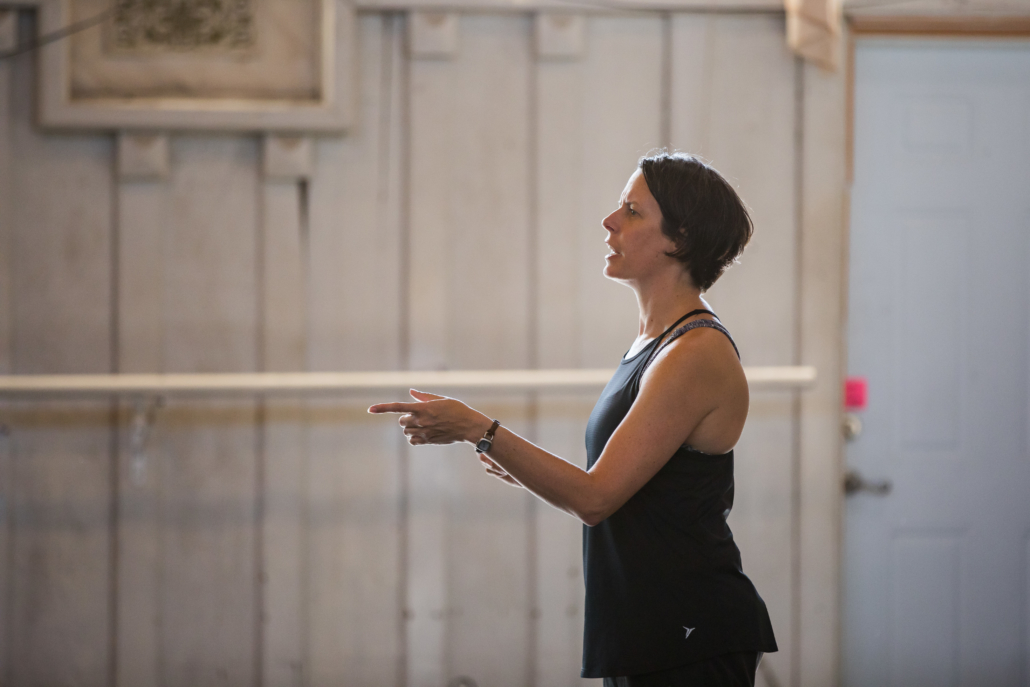
Dance Series 02, the touring production, will also include works of Michael Smuin, the late founder of the company, alongside Renaissance, Seiwert’s premiere set to music from Kitka, a woman’s chorus.
The piece is inspired by the Indian “women’s wall” protests, during which women have formed a 620 km human chain and given new hope to women’s rights in India.
Watch the company’s promotional video for Renaissance here:
25 April 2019
Scottish Ballet has announced that the company will be joined by Senior Guest Artist Cira Robinson for the world premiere of Helen Pickett‘s The Crucible. The first major commission of Scottish Ballet’s 50th anniversary year, the production will open the dance programme at the Edinburgh International Festival, 3-5 August 2019.
As part of a longstanding collaboration between the two companies, Ballet Black’s Senior Artist Cira Robinson will join Scottish Ballet to dance the role of Tituba. Bringing a breadth of experience, Cira will play a vital role in developing this rich and complex character in Arthur Miller‘s drama of power and persecution. A story as relevant today as when it was first written, Miller’s 1953 masterpiece explores the impact of the 17th-century Salem Witch Trials in Massachusetts.
Ballet Black is the UK’s professional ballet company for international dancers of black and Asian descent. Their goal is to see a fundamental change in the number of black and Asian dancers in UK ballet companies. By creating a central black female character, rarely seen in the UK outside of Ballet Black repertoire, the two companies aim to openly address the challenges of diverse representation in UK ballet (on and off stage), and particularly the lack of black British female ballet dancers.
Read the full article on Broadway World.

 Smuin Contemporary Ballet / Photo by Chris Hardy
 Charlotte Ballet/Jeff Cravotta