

DDP Team Blog: Debunking the Racialized Dancing Body
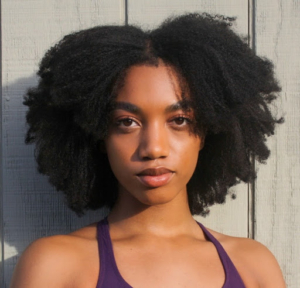
By DDP Research Intern Junyla Silmon
“One – Two – Three – Four – Five – Six – Seven – Eight”
Are you clapping on the one and the three or the two and the four?
On the weekend of July 11th 2020, I attended an online seminar titled “Black Women in the Arts” that centered around the professional experiences of three prominent black female artists: Dr. Brenda Dixon Gottschild, Shonica Gooden, and Nambi E. Kelley. During a conversation with Dr. Brenda, we briefly explored the content of her book, The Black Dancing Body: A Geography from Coon and Cool, and I was thoroughly intrigued by her interest and research in debunking the racialized dancing body. Based on this conversation and my recent studying of culturally responsive pedagogy, I took some time to uncover my experiences and interpretations of this concept. These are my thoughts –
What is debunking the racialized dancing body?
Debunking the racialized dancing body is understanding that dancing body types are not limited to the stereotypical styles associated with their racial identity. In one form, the racialized body can be expressed through typecasting. I have also found that a major aspect of the black bodily experience is earning and justifying your blackness through the music you consume or the rhythm you possess. I find it interesting how society has boxed the ideas, styles, and actions of people as if human beings are not naturally complex individuals with a mix of interests. It is odd to say that because I am black, I can only partake in the traditional “black activities” that society has deemed acceptable, and if I do not choose to participate, then my black card is revoked. I have noticed that in the black community, there is immense pressure to always uphold your race, or blackness, to validate one’s existence. Racism perpetuates the notion that black people are a monolith, and as a result, the black community attains an unspoken rule to always be on our “best behavior.”
This topic becomes more layered for dancers as we work with two versions of our body: its real form and the form that is constructed by society’s labels. Because society tries to construct the facets of the human body, I’ve questioned how my dance professors have used society’s lenses to view and critique my dancing body. I often think about the impact that the media has had on the black female body, specifically its implication of hyper-sexuality and unwarranted adulthood in little black girls. As a result, I ask myself: How do these preconceived notions correlate with the way my black body is trained and treated by non-black professors? I have had problems with teachers not understanding my body because I did not have the tall, lean structure of other white girls in my dance classes. Since I had a muscular tone and a bigger butt, I spent a lot of time battling with the desire to fulfill their Eurocentric ideas of beauty and developed improper training tools in the process. Ballet in particular felt like racially motivated psychological warfare, and it took me many years to unlearn these embedded stereotypes. My recent experience as a researcher with Dance Data Project® (DDP) has also offered a new perspective on my relationship with ballet. I learned fairly early that ballet promoted a culture of fear, European elitism, racism, and misogyny; however, I am now understanding how this culture is sustained and thriving. My most poignant research has looked at the history of gender disparities within the leadership roles of US ballet companies, and I was not shocked to find that men, majority white, occupied 71% of the higher positioned roles (artistic director, executive director, founder, etc). These stereotypes continue to be pushed because the people in power are not changing. Dance organizations cannot progress if the people in power do not reflect the masses of individuals they serve. Once when we begin to expand the perspective of the gatekeepers, we expand the overarching community.
Another way the racialized dancing body is emphasized is through isolating art forms to specific groups of people. This isolation is destructive because it disregards the other masses of people who have also contributed to the art form’s existence. As an example, classical and rock n’ roll music are often associated with white audiences; however, they are not exclusive to white consumption. In fact, both musical forms are highly involved with the black dynamic (ex: Chuck Berry is deemed as the father of rock n’ roll while Chevalier de Saint-Georges is remembered as the first classical composer of African origins and greatly competed against Mozart). The same is to be said about hip hop, R&B, jazz, and gospel as they are not exclusive to black consumption. Although black artists have created and popularized these musical forms, the act of white consumption in such styles should not be tokenized or deemed as the ticket into blackness (i.e. an “invitation to the cookout”). In opposition, a black person who partakes in what is considered “white activities” should not be stripped of their blackness. At its core, art, music, and dance should be created, expressed, and shared for all people to delight in. If not, by isolating certain styles to certain races, society disregards art’s true interconnection.
Junyla Silmon, a native of Canton, MS, graduated from the Mississippi School of the Arts in 2018 as the salutatorian of her class. Junyla is a senior at Montclair State University earning a Bachelor of Fine Arts in dance performance and a minor in business administration. As a performing artist, she has worked with Fredrick Earl Mosley, Roderick George, Mark Dendy, Christian von Howard, and Yusha-Marie Sorzano, among others. She is a company member of Freespace Dance, an artist in residence with Company SBB//Stefanie Batten Bland, and is completing a two-year fellowship with JCM/TheREDprojectNYC. Junyla has served as a research intern for Dance Data Project since Summer 2021.